Barcodes that carry their own proof.
A QR code points somewhere. A Gamutlock mark carries the claim itself — so the answer travels with the object instead of living on somebody’s server.
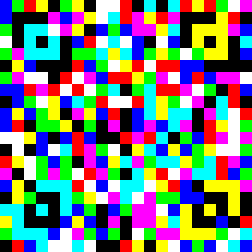
You have used a credential before. A passport, a ticket, a staff badge — something that proves a fact about a person.
An object credential is the same idea, attached to a thing instead of a person. The product’s claim about itself travels with the product.
You already know the difference between a stitch and a rip. A stitch carries a link back to where it came from. That link is the whole difference between building on someone’s work and taking it.
An object credential puts that link inside the work itself, so it survives leaving the platform that enforced it.
A paper certificate asks you to trust the paper. A QR code on a box asks you to trust that a database still exists, is still honest, and is reachable right now. An object credential asks you to trust neither — the proof is in the mark, and the check happens in your hand.
The lock is in the code, not on our server.
They profile the person. We prove the thing.
Not un-copyable. Any barcode can be photographed and reprinted. What a copy cannot do is produce a different valid claim.
Signed. Sealed. Bound.
Three things a mark can carry. Use one, or stack them.
Signed
The mark says who issued it, and it can’t be made to say anything else.
Sealed
Parts of the mark open only for the people you choose. Everyone else can see that a sealed part is there, and nothing inside it.
Bound
The mark belongs to one holder, and the Reader checks it’s in their hands.
Does this fit?
I arrived because…
Questions before you start, or need something the studio doesn’t offer yet? Talk to us.
Every fix for this is a reaction.
Ask people what they do about it and you get the same answers: name and shame them. Report them. File with the FTC. Ask the platform to step in. Stop scanning codes altogether.
Two of those actually prevent something — refusing to scan, and refusing to let a thing transfer. Both work by giving the thing up.
We think prevention shouldn’t cost you the capability.
What’s true today
Where the line is.
What the mark is built to do, and where it stops.
It proves the original.
It doesn’t go looking for copies. If someone watches your work and performs it again themselves, nothing of yours is left in what they made — so the part worth protecting is the part behind the mark.
It carries the claim.
It doesn’t turn a QR code into a safe one. QR is built for reach and does that well; the mark is built for trust. Use each for what it’s for.
It vouches for the issuer.
We confirm an issuer’s key belongs to a provisioned, active tenant. What they say about their goods is theirs to stand behind.
Talk to us
A person reads every message, whether you issue marks for a company, make things on your own, or just scanned one.
Holding your own root key, a custody contract for marks meant to last decades, or pricing per document or shipment at volume.
A maker, a creator, a small shop. Getting your first mark right, what to seal for your audience, or a question the studio didn’t answer.
A verdict you didn’t understand, or a mark you think is fake. We can explain what the reader saw. The issuer named on the verdict is the one who can act on the object.
Thanks. A person will read this and reply from webmaster@gamutlock.com.
If you think the object is fake, tell the seller or the issuer named on the verdict too. They can act on it; we can’t.